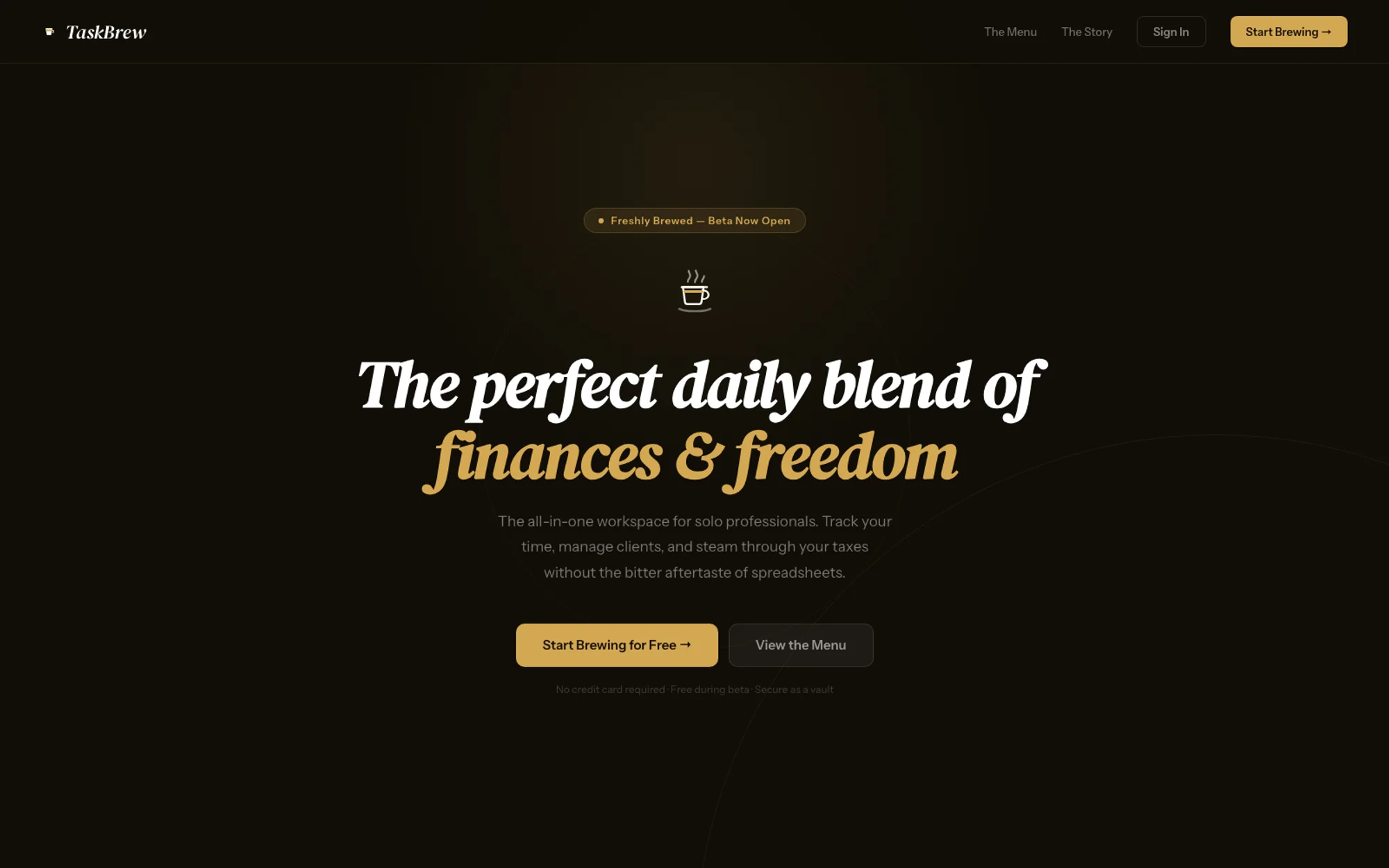
The Problem
Freelancers were paying for tools built for someone else:
- Tool Overload: Time, invoices, expenses, taxes and clients lived in different apps that didn't talk to each other.
- Built for Teams: Most business software is designed for companies and enterprises, full of features a solo professional never uses.
- Hidden Mental Cost: Every switch between apps was a small tax on focus, and small taxes add up fast.
The Goal
The main objective was to create one calm, focused workspace that handles the business side so freelancers can get back to the actual work.
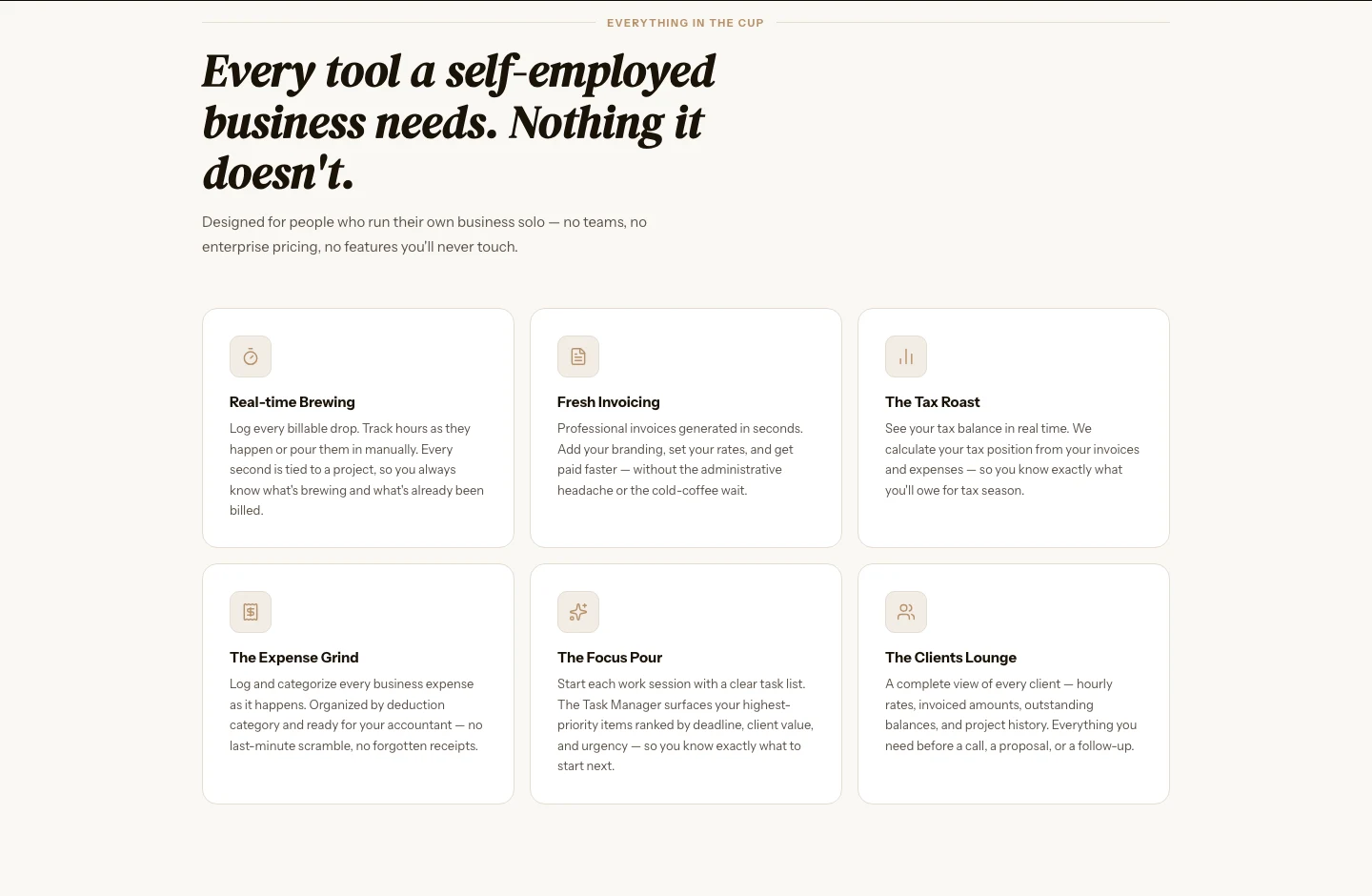
- Unify the Workflow: Bring time tracking, invoicing, expenses, taxes and client management into a single product.
- Design a Human Experience: Make admin feel light and approachable instead of corporate and overwhelming.
- Ship a Real Product: Build a production-ready web app as a solo designer-developer, using AI as a build partner to move fast without cutting corners.
My Design & Development Process
Brand & Naming
TaskBrew began life as KlaroTrack. The name worked, but it was cold and didn't say anything about how the product should feel. Renaming it to TaskBrew unlocked the whole identity: a coffee-shop metaphor that became the design system itself. Features got names like The Tax Roast, The Focus Pour, The Expense Grind and The Clients Lounge, turning dry admin into something warm and a little playful.
UX & Interface Design
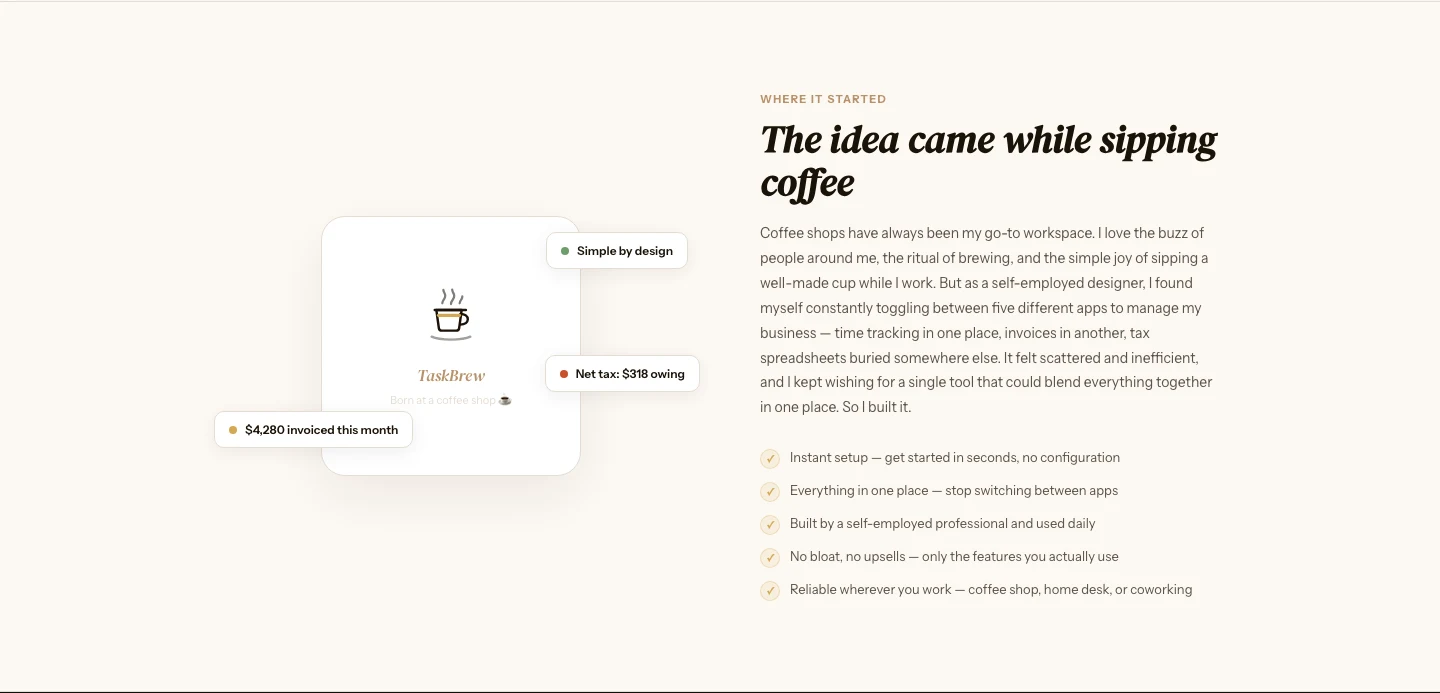
I designed every screen in Figma around one question: does this make the user feel in control? That meant clear hierarchy, fewer decisions per screen, and dashboards that answer "how am I doing?" at a glance instead of hiding it in reports.
Technical Challenge: Real-Time Everything
- The Task: Timers, totals and tax estimates needed to update instantly across the app, without reloads or lag.
- The Result: I built the front-end in React, Vite and Tailwind, with Firebase handling authentication, real-time data and storage, so every number updates the moment something changes.
Final Results & Reflection
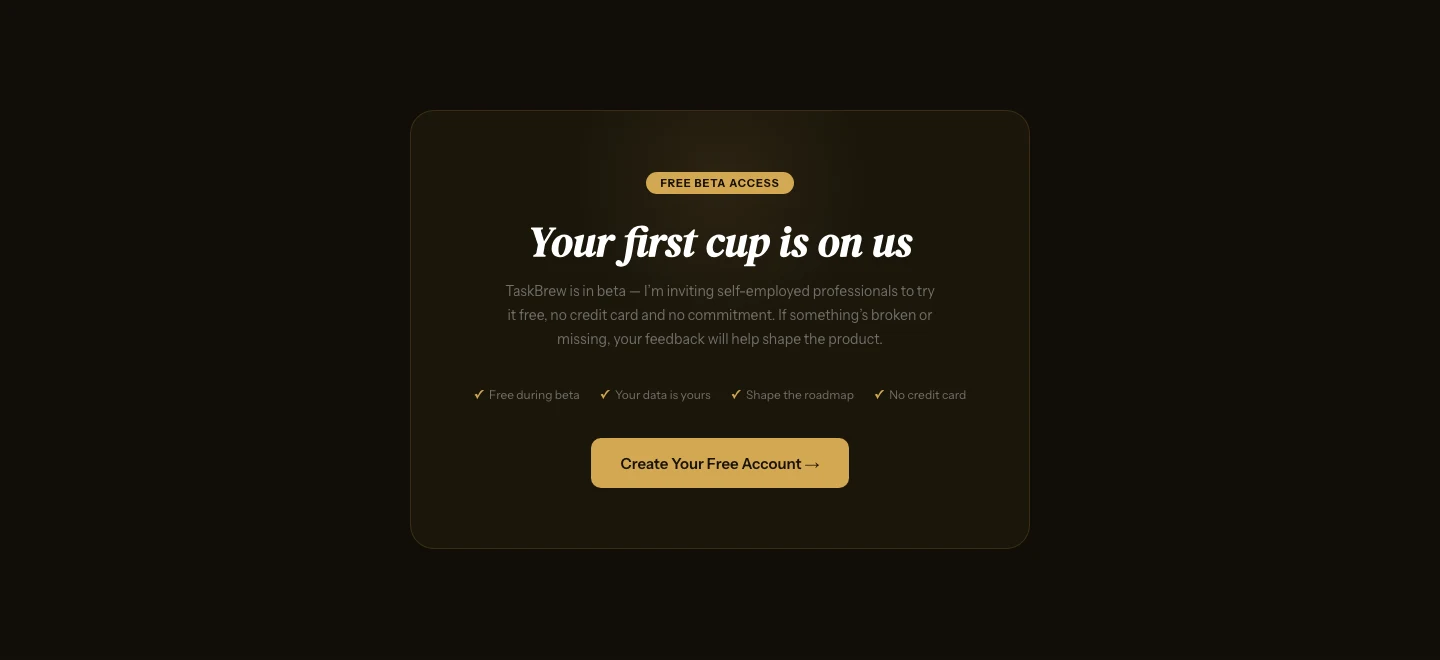
TaskBrew is the project where I stopped being only the designer and became the whole product team. It's currently in beta at taskbrew.app, used by me and a group of freelance designer friends, and using it every day to run my own studio is honestly the best (and most brutal) user testing there is.
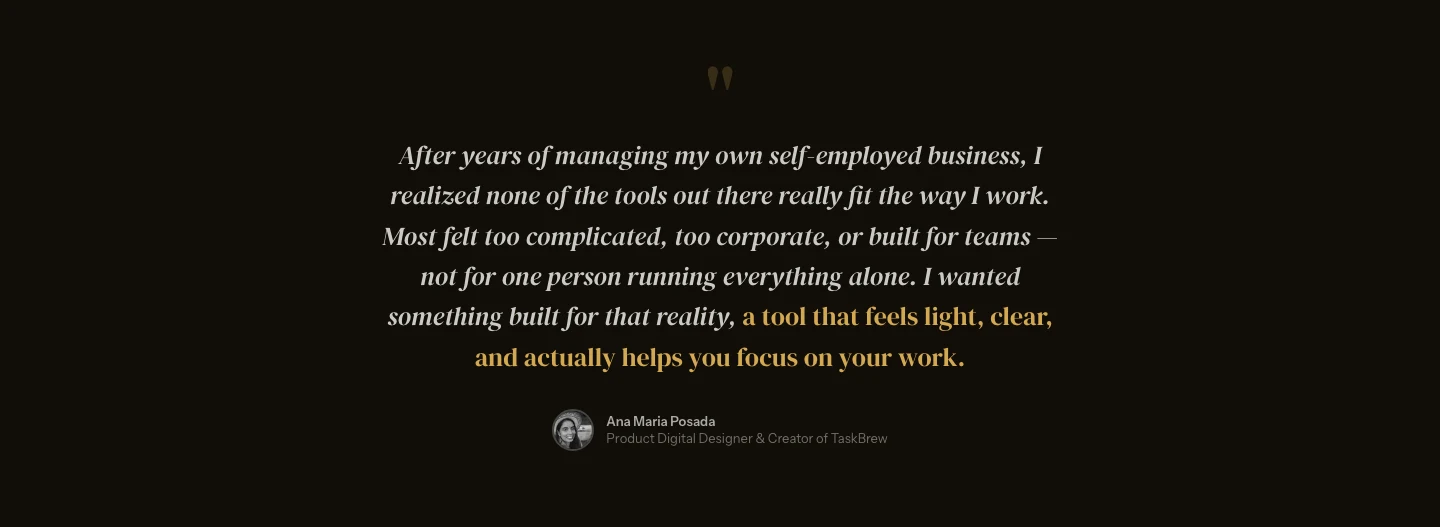
- Designing for Myself, Honestly: Being my own user forced me to cut every feature that didn't earn its place. Simplicity turned out to be the hardest thing to design.
- Naming Is Design: The moment KlaroTrack became TaskBrew, the product stopped being a list of features and got a personality. Every design decision after that got easier.
- Full-Stack Confidence: Taking a product from Figma to a live app with auth, a database and real users proved I can own the whole journey, not just the screens.
What's Brewing Next
TaskBrew is in beta, used daily by me and a small group of freelance designers. The product is built and stable; the next chapter is about growing it beyond that first circle.
- Beta Feedback: Learning from how fellow designers use it day to day to refine the core flows and prioritize what gets built next.
- Expanding the Reach: Planning to open TaskBrew to more freelancers beyond the design community.
- Exploring a Business Model: Evaluating whether TaskBrew grows into a paid product, and if so, what pricing would feel fair to the solo professionals it was made for.