The Challenge
- Most productivity tools feel overwhelming, cold, or too complex for a neurodivergent mind.
- They often fail to address core ADHD challenges like emotional regulation, task initiation, and "time blindness."
- As a user, I'd forget to even open these tools, or feel judged by them, which defeated the entire purpose.
The Goal
- Design an AI assistant that feels empathetic, gentle, and intuitive—a supportive friend, not a cold manager.
- Create a tool to help users feel supported, focused, and understood.
- Build a functional, voice-based prototype using no-code tools to prove the concept.
My Design Process
Research & Insights:
As a designer with ADHD, I was my own main user. I built from my real experiences as forgetting deadlines, feeling overwhelmed, and struggling with tools that weren’t made for the way my brain works. I also studied other ADHD apps and saw the same issue: most of them lacked empathy, clarity, and true simplicity.

ADHD-Aware UI/UX (Figma):
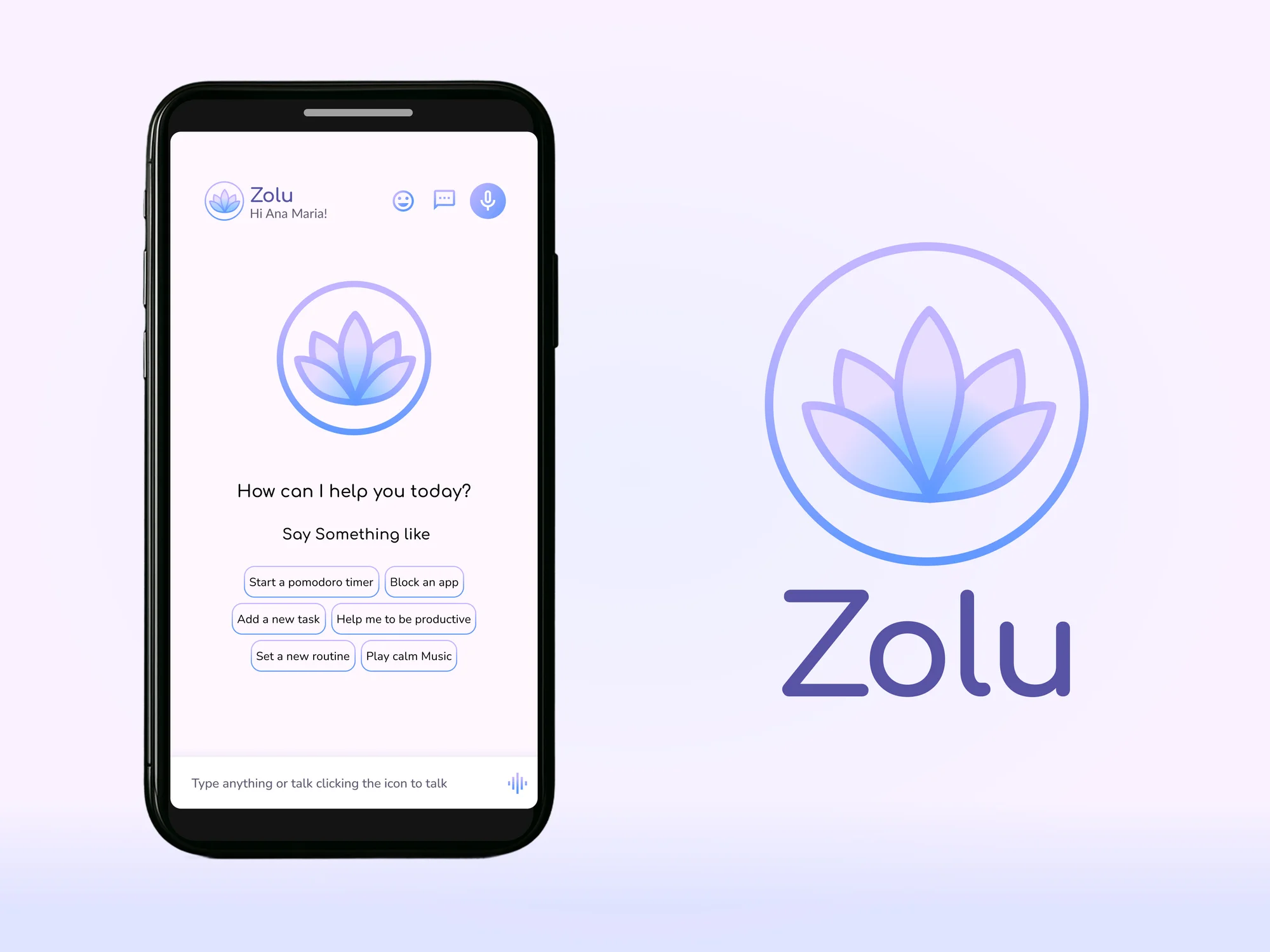
I designed the entire app in Figma with an "ADHD-Aware" philosophy. This meant a focus on low visual stimulation:
- Colors: Calm purple tones and gentle gradients to reduce cognitive load.
- Typography: Clean, clear hierarchy so information is easy to digest.
- Navigation: Simple, intuitive, and uncluttered.

No-Code AI Prototype (Bolt & GPT-4):
This was my first-ever mobile app, and I'm not a native coder. I used Bolt, a no-code tool, to build the functional prototype. I integrated GPT-4 to handle the empathetic dialogue and task management, learning through trial and error how to write effective prompts to get the supportive, non-judgmental tone I wanted.
Empathetic Voice Interface (ElevenLabs):
To make the app truly personal and empathetic, I cloned my own voice using ElevenLabs. This created a realistic, warm, and supportive voice assistant, making the interaction feel like talking to a real person who understands.
Showcase
The final concept is an empathetic companion that understands the unique challenges of ADHD. Key features include:
- Smart Task Management with gentle, non-judgmental reminders.
- Flexible Pomodoro Timers tuned to a user's natural rhythm.
- Gentle Mood Tracking & emotional support.
- ADHD-Optimized Audio (brown noise, gamma waves, etc.).

Results & Impact
- I successfully designed and built a working, high-fidelity prototype from scratch as a solo designer.
- I created a complete ADHD-friendly design system and UX flow that directly addresses common neurodivergent pain points.
- I engineered a functional AI assistant with a custom voice using only no-code tools, proving a complex app idea is achievable without a coding background.
